

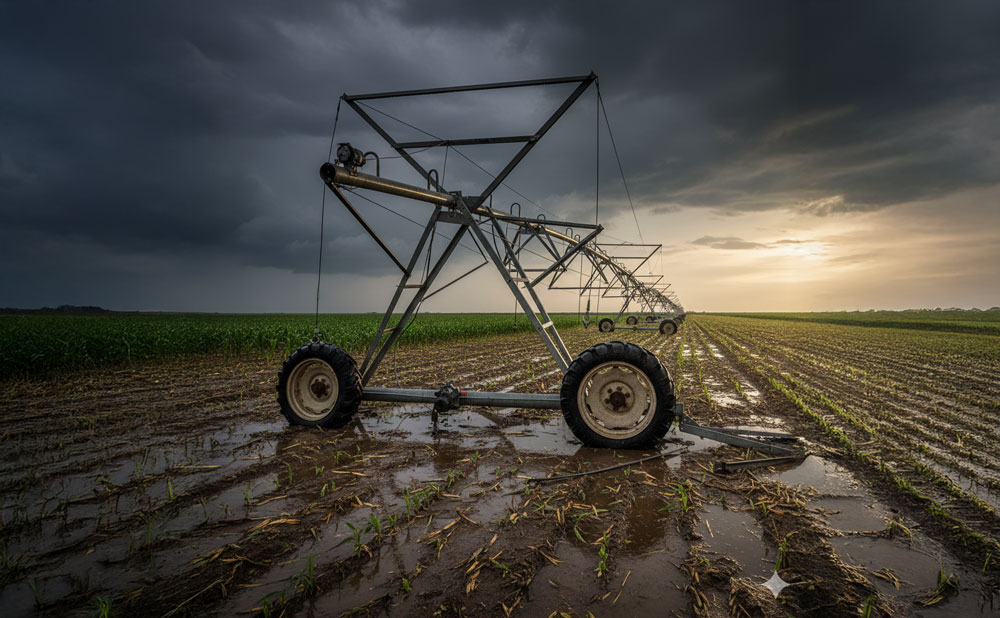
A strong summer thunderstorm can move across the Nebraska Panhandle quickly, leaving growers with irrigation equipment that needs attention just when crops cannot afford an extended interruption. Around Hemingford, wind, hail, heavy rain, and lightning can all create problems for irrigation systems during critical parts of the growing season.
The fastest path back to dependable irrigation starts with a careful post-storm inspection, identification of damaged components, and targeted repairs that restore proper system operation. Growers should check irrigation equipment after severe weather even when the system looks intact from the road, because damage to sprinklers, electrical components, alignment, piping, or structural parts may not be immediately obvious.
What local growers should know
-
High winds and hail can damage exposed irrigation components even when the system remains standing.
-
Box Butte County regularly experiences thunderstorms capable of producing strong winds, hail, lightning, and intense rainfall during the growing season.
-
Irrigation interruptions can be especially important during hot, dry stretches when crops depend heavily on scheduled water applications.
-
A post-storm inspection should address both obvious structural damage and less visible problems affecting water distribution or system operation.
-
Running damaged equipment without checking it first can turn a manageable repair into a larger irrigation problem.
Why Storm Damage Matters to Hemingford Growers
Storm damage matters to Hemingford growers because irrigation equipment must operate reliably through a growing season that can combine dry conditions with sudden severe thunderstorms. When a storm damages a system, the concern is not only the equipment itself but also the lost irrigation time and uneven water application that may follow.
Recent conditions illustrate why that matters locally. Nebraska Extension reported in July 2026 that a dryland wheat variety study near Hemingford failed because of drought while irrigated wheat in the area was performing well. That contrast underscores the practical importance of dependable irrigation when rainfall is not enough to support crop needs.
Sorensen Irrigation, LLC. helps area growers address irrigation problems after storms and other equipment issues. From this point forward, our focus is straightforward: identify what was damaged, determine what is needed to restore reliable operation, and help growers get their irrigation systems functioning properly again.
Local Storm Conditions Can Put Irrigation Equipment at Risk
Local storm conditions can expose irrigation systems to damaging wind, hail, lightning, and heavy rainfall within a single event. In an agricultural area filled with exposed equipment, a thunderstorm does not have to destroy an entire pivot to disrupt irrigation.
The National Weather Service issued a severe thunderstorm warning affecting Hemingford and central Box Butte County on August 15, 2026, with radar indicating wind gusts up to 60 mph and hail up to 1.25 inches. Torrential rainfall was also reported with the storm. Another warning near Hemingford on August 17 included 60 mph wind gusts and quarter-size hail.
These conditions can put pressure on exposed irrigation equipment throughout the area, including farms near Berea, the Box Butte County Fairgrounds, Wild Horse Butte, and agricultural ground between Hemingford and Alliance.
Warning Signs of Storm-Damaged Irrigation Equipment
Storm-damaged irrigation equipment often shows changes in alignment, water distribution, movement, or normal operation. After severe weather moves through Hemingford, growers should inspect the system before assuming it came through the storm without problems.
Watch for signs such as:
-
A pivot span or tower that appears out of alignment.
-
Sprinklers, drops, nozzles, or other water-application components that are missing, bent, or spraying incorrectly.
-
Visible leaks, damaged piping, or unusual water loss.
-
Towers that do not move normally or appear to track incorrectly.
-
Electrical components that show visible storm damage or fail to operate as expected.
-
Tires, wheels, gear-drive components, or other moving parts that appear damaged.
-
Uneven pressure or noticeably different water patterns along the system.
-
Unusual noises, stopping, binding, or repeated shutdowns during operation.
A quick visual check can identify obvious problems, but it should not replace a more complete evaluation when a system has taken a direct hit from wind, hail, or lightning.
When to Call an Irrigation Professional
Growers should call an irrigation professional when storm damage affects system movement, structural alignment, electrical operation, water delivery, or components that cannot be safely evaluated from the ground. Those issues can require more than a simple adjustment.
A grower can safely look for obvious leaks, displaced sprinklers, fallen debris, standing water, and visible structural changes from an appropriate distance. Electrical troubleshooting, climbing equipment, working around unstable structures, or attempting repairs on damaged moving components should be left to qualified service personnel.
For farms around Box Butte County, early evaluation also helps determine whether the system can return to service quickly or whether additional repair work is needed before operation resumes.
Common Causes of Post-Storm Irrigation Problems
The most common post-storm irrigation problems come from wind, hail, lightning, saturated ground, and debris affecting exposed components. Each can create a different type of failure, which is why a complete inspection is more useful than checking only one part of the system.
1. Strong wind
High wind can place substantial stress on long irrigation structures and exposed sprinkler components. It may also move debris into the system or contribute to alignment problems.
2. Hail
Hail can strike hoses, sprinklers, plastic components, controls, and other exposed equipment. Damage may be localized rather than obvious across the entire system.
3. Lightning and electrical disruption
Thunderstorms can create electrical problems that affect controls or system operation. Electrical issues should be diagnosed rather than repeatedly resetting equipment and hoping the problem clears.
4. Heavy rainfall and soft ground
Intense rainfall can leave wheel tracks and field areas saturated. When a pivot begins moving again, poor traction or deep tracks can affect travel and place additional stress on equipment.
5. Windblown debris
Branches, loose materials, and other debris can contact sprinkler equipment or moving components during strong storms.
How Growers Can Reduce Storm-Related Downtime
Growers can reduce storm-related downtime by inspecting irrigation systems promptly after severe weather and addressing small problems before the next irrigation cycle. A consistent storm-check routine is particularly useful during the Nebraska Panhandle’s active summer growing season.
After a storm, walk or safely inspect the system from the ground before starting it. Look for displaced parts, leaks, debris, visible electrical damage, alignment changes, and unusually deep wheel tracks. If the system is operating, watch the water pattern and movement rather than assuming successful startup means every component is working correctly.
Maintenance before storm season also helps. Worn or loose components are more likely to become problems when strong wind or hail arrives.
What to Expect From Storm Damage Repair
Storm damage repair should result in a clear understanding of what failed and what work is required to return the irrigation system to dependable operation. The exact repair depends on which components were affected and how extensive the damage is.
Some storms may leave only isolated sprinkler or hardware problems. Others can involve structural, drive, water-delivery, or electrical issues that require a more involved repair.
Our goal is to focus on the actual source of the problem rather than replacing parts unnecessarily. Once repairs are completed, proper operation and water distribution should be checked before the system returns to its normal irrigation schedule.
Common Mistakes After an Irrigation System Takes a Storm Hit
The biggest post-storm mistakes are restarting equipment too quickly, overlooking hidden damage, and delaying repairs until the next irrigation cycle. Those choices can increase downtime when crops need water.
Mistake: Starting the system without inspecting it.
Consequence: Damaged components may create additional problems once the equipment begins moving.
Better approach: Perform a ground-level inspection first.
Mistake: Looking only for major structural damage.
Consequence: Smaller leaks, sprinkler damage, or electrical issues may go unnoticed.
Better approach: Check movement, water distribution, controls, and individual components.
Mistake: Waiting until the field needs water again.
Consequence: A repair problem becomes an irrigation scheduling problem at the same time.
Better approach: Evaluate storm damage as soon as conditions are safe.
A Common Hemingford Storm Scenario
A common Hemingford storm scenario begins with a fast-moving afternoon or evening thunderstorm producing wind, hail, and heavy rain across an irrigated field. The pivot may still be standing afterward, but several sprinkler components are damaged, a section is not operating normally, or the system does not travel as expected.
The grower has an important decision to make. Restarting immediately may risk further damage, while leaving the system down for several days could interfere with the crop’s irrigation schedule.
The better approach is to inspect the equipment, isolate the problem, and determine what repairs are needed before normal operation resumes. This scenario is representative of the kinds of conditions area farms may face and is not presented as a specific Sorensen Irrigation customer project.
Irrigation Repair Solutions After Severe Weather
Irrigation repair after severe weather should address the damaged parts of the system as well as anything preventing normal water application or movement. Depending on the equipment and damage involved, the appropriate solution may range from component repair to more extensive system work.
We can evaluate storm-related irrigation problems and help determine the appropriate repair path for the equipment involved.
Repair Now or Monitor the System?
Immediate repair is the better option when damage affects safe operation, water distribution, system movement, or essential irrigation functions. Monitoring may be reasonable only when an inspection finds no operational damage and the system continues to perform normally.
Minor cosmetic damage is different from a malfunction. A system that leaks, tracks improperly, shuts down unexpectedly, applies water unevenly, or shows electrical or structural problems should not simply be watched through the rest of the season.
That distinction is especially important during dry periods when losing additional irrigation time can put more pressure on crop management.
Irrigation Service Around Hemingford and Box Butte County
Irrigation service around Hemingford supports growers throughout the surrounding agricultural area, including farms toward Alliance, Berea, and other parts of Box Butte County. The region’s mix of irrigated corn, wheat, sugar beets, and edible beans makes dependable water delivery an important part of local crop production. NRCS identifies all four among the irrigated crops grown in the Box Butte watershed area.
The Cost of Ignoring Storm Damage
Ignoring irrigation storm damage can increase downtime, contribute to uneven water application, and allow a smaller equipment problem to become more disruptive. The cost is not limited to a damaged component when the system is also responsible for delivering water during a critical crop stage.
That is particularly relevant in a region where irrigation can carry crops through dry conditions. Prompt evaluation gives growers more time to plan repairs before the next scheduled water application becomes urgent.
FAQ About Irrigation Storm Damage in Hemingford
How soon should I inspect my irrigation system after a storm in Hemingford?
Inspect the system as soon as severe weather has passed and field conditions are safe. Start with a visual ground-level inspection for leaks, misalignment, displaced sprinklers, debris, and obvious damage. If electrical, structural, or movement problems are present, have the system professionally evaluated before returning it to normal operation.
Can strong winds damage a center pivot even if it is still standing?
Yes. A system can remain upright and still have damaged or displaced components, alignment issues, sprinkler problems, or other operational concerns. After the strong thunderstorms that occur across Box Butte County, growers should evaluate how the system moves and applies water rather than checking only whether the structure is standing.
Does hail around Hemingford damage irrigation equipment?
Yes, hail can damage exposed irrigation components depending on hail size, wind, equipment position, and the severity of the storm. Recent National Weather Service warnings affecting the area have included hail threats, making post-storm checks a practical part of irrigation management during the summer growing season.
Should I run my pivot immediately after a severe thunderstorm?
Not before checking it. A basic inspection can reveal leaks, displaced components, debris, unusual wheel tracks, or structural changes before movement begins. If anything appears unsafe or abnormal, avoid operating the equipment until the problem can be evaluated and the necessary repairs are identified.
Why is irrigation reliability especially important around Hemingford?
Irrigation reliability is important because local crops may need supplemental water during dry growing conditions. Nebraska Extension’s 2026 observations near Hemingford noted drought-related failure in a dryland wheat study while irrigated wheat was performing well, demonstrating how significant irrigation can become when rainfall is limited.
Can heavy rain create irrigation system problems even without hail?
Yes. Heavy rainfall can soften field conditions, deepen wheel tracks, move debris, and affect how irrigation equipment travels through the field. Growers should consider both equipment damage and field conditions before restarting a system following an intense Box Butte County thunderstorm.
What should I check before calling for irrigation repair?
Check what you can safely observe from the ground, including where the problem is located, whether water is leaking, whether a tower stopped moving, whether sprinklers are damaged, and whether controls indicate a problem. That information can help describe the issue, but avoid unsafe electrical or structural troubleshooting.
Is every post-storm irrigation problem an emergency?
No. The urgency depends on the damage, crop water needs, system condition, and whether the equipment can operate safely. Problems that stop irrigation entirely or affect electrical, structural, movement, or water-delivery functions generally deserve quicker attention than minor damage that does not interfere with normal operation.
Keep Water Moving When Nebraska Weather Hits
Storms are part of farming in the Nebraska Panhandle, but irrigation problems do not need to remain unresolved longer than necessary. At Sorensen Irrigation, LLC., we help local growers identify irrigation damage, understand the repair needed, and work toward restoring dependable operation.
Protect Your Next Irrigation Window
Get storm-related irrigation problems addressed before downtime starts affecting your watering schedule.